
Implant Supported Dentures
Stable, confident dentures that restore function and quality of life
What Are Implant Supported Dentures?
Implant supported dentures are prosthetic restorations anchored to dental implants rather than relying solely on tissue surface contact and surface tension. Traditional dentures rest on the gum ridge, which continues to resorb over time, causing the denture to become progressively loose and ill-fitting. Implant supported dentures overcome this fundamental limitation by using titanium implants as anchors, creating a stable foundation that resists movement during eating, speaking, and smiling.
At our Bethesda dental practice, we specialize in transforming the lives of patients frustrated with loose, uncomfortable dentures. These prosthetics are designed for patients who wear dentures and want dramatically improved stability, retention, and functionality. Many people who have worn loose or uncomfortable traditional dentures are surprised to discover that implant supported alternatives feel and function like natural teeth. The restoration may be removable, requiring daily cleaning and nighttime removal, or fixed in place, depending on the patient's preferences and clinical circumstances.
Implant supported dentures represent a middle ground between traditional dentures and complete fixed hybrid prostheses. They offer substantially superior function and comfort compared to conventional dentures while being more conservative than fixed all-on-four or all-on-six restorations. Our prosthodontist evaluates each Bethesda-area patient to determine which approach best addresses their specific clinical situation, functional goals, and preferences.
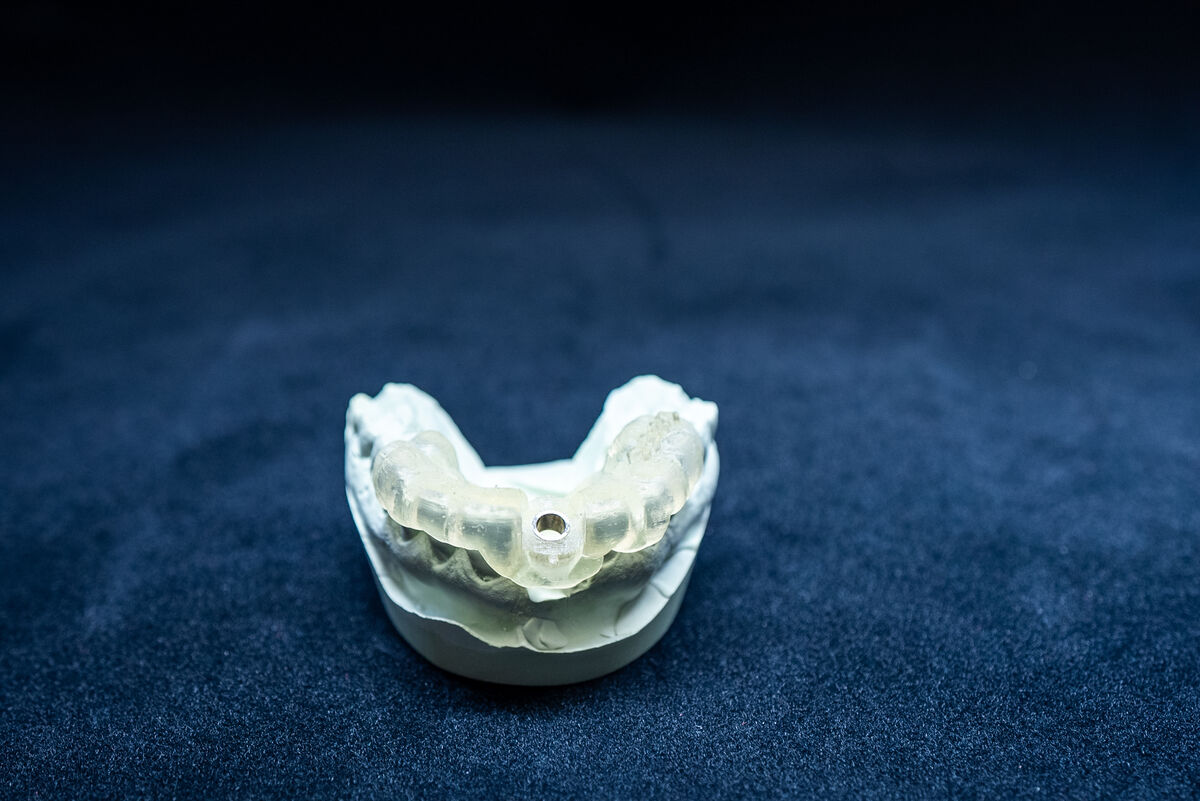
Types of Implant Supported Dentures
Several clinical approaches exist for anchoring dentures to implants, each offering different trade-offs between function, maintenance, and cost. Understanding these options allows you to make an informed decision about your treatment. Patients in Bethesda and Washington, DC benefit from our prosthodontist's extensive expertise in customizing each design to individual needs.
Bar-Retained Overdentures
Bar-retained designs use a metal bar that spans multiple implants. The denture is fitted with clips or housings that engage this bar, holding the denture firmly in place while allowing removal for cleaning. The bar distributes forces evenly across the implant complex. This approach is particularly useful when implants are not optimally positioned, as the bar can span variable distances and angles. Bar-retained dentures reduce movement significantly compared to traditional dentures but retain the psychological advantage of removability and the ease of nighttime removal.
Ball and Locator Attachment Overdentures
Each implant is fitted with a ball or locator attachment, and the denture contains corresponding sockets. This design is simpler than bar-retained systems and requires fewer implants, typically two to four per arch. The individual attachments allow limited movement, accommodating slight implant angulation variations. Locator attachments, a refinement of the older ball attachment, offer better retention and easier insertion. This approach is popular for patients with limited bone or financial constraints who still want a meaningful improvement over traditional dentures.
Fixed Implant Dentures (Hybrid Prostheses)
At the opposite end of the spectrum, fixed implant dentures are permanently secured to implants and cannot be removed by the patient. They require a minimum of four to six implants per arch to distribute forces appropriately. The fixed design allows maximum stability and function, approaching that of natural teeth. Some fixed dentures can be removed for maintenance and adjustment only by the dentist, while others are truly permanent. Fixed restorations demand excellent oral hygiene, as food cannot be rinsed away through denture removal, and comprehensive bone volume is typically required.
Our prosthodontist will discuss these options with you, explaining the clinical advantages and practical considerations of each. Your choice depends on your bone volume, number of remaining teeth, functional demands, and personal preferences regarding removability and maintenance.
Who Benefits from Implant Supported Dentures
Implant supported dentures are ideal for patients experiencing the frustrations of ill-fitting traditional dentures. These include individuals with loose dentures that shift during eating or speaking, causing embarrassment or functional difficulty. Patients who have difficulty eating due to denture movement, or who have significantly reduced their diet to soft foods, experience dramatic improvement with implant support. In our Bethesda office, we've transformed countless smiles.
Individuals with social concerns about denture retention often find that implant support restores confidence. Loose dentures can make speech unclear and can slip during laughing or eating, creating anxiety about public eating. Implant supported restorations eliminate these concerns. Additionally, patients who have worn dentures for many years often develop significant bone loss, making conventional dentures progressively looser over time. For Bethesda patients in this situation, implant support can be transformative.
Patients who have experienced bone loss from long-term denture wear are excellent candidates for implant supported dentures. The dentures need not cover as much surface area when supported by implants, reducing bone surface contact and allowing more natural saliva flow. The implants themselves stimulate bone preservation, halting the progressive resorption that characterizes denture wear. Many Bethesda patients report improved taste, easier eating, and better overall quality of life after transitioning from traditional to implant supported dentures.
Expert Care in Bethesda
Our team brings decades of prosthodontic expertise to every consultation. Specialized training in implant dentistry and denture design ensures that each Bethesda patient receives a customized treatment plan optimized for their unique anatomy and goals. Specialist credentials and decades of successful outcomes demonstrate our commitment to exceptional care. Explore our comprehensive candidacy assessment and learn about fixed full arch alternatives and bone grafting solutions for your situation.
The Implant Supported Denture Treatment Process
Treatment begins with comprehensive evaluation, including cone beam CT imaging to assess available bone volume, quality, and positioning. Our team determines how many implants can be placed and in what positions to optimally support your chosen prosthetic design. If bone is insufficient, grafting procedures are performed to create adequate support.
The surgical phase involves placing implants in predetermined positions. The number of implants varies depending on the design: typically two to four for ball or locator attachment designs, or four to six for fixed restorations. Implants are allowed four to six months for integration in the upper jaw and three to four months in the lower jaw. A temporary denture may be adjusted during healing to avoid contacting the implant sites.
Once integration is confirmed, our team fabricates or modifies your existing denture to incorporate the retention mechanisms. For bar-retained designs, the bar is constructed and customized to the implant configuration. For ball or locator attachments, the corresponding sockets are positioned in the denture. For fixed restorations, a custom framework is milled and secured to the implants, then topped with ceramic teeth and gum-like material. The final denture is delivered, fitted, and adjusted for comfort and function. Follow-up appointments monitor healing and make necessary refinements.
Implant Dentures vs. Traditional Dentures
Traditional dentures rest on gum tissue, with retention achieved through surface tension and gravity. This design has several inherent limitations. As the jawbone resorbs following tooth loss, the ridge shrinks, and the denture becomes progressively loose. Many patients eventually find their dentures unreliable and uncomfortable. The broad surface coverage of traditional dentures can alter taste and restrict saliva flow. The lack of independent anchoring means movement during eating, speaking, or laughing can cause social discomfort.
Implant supported dentures overcome these limitations through biomechanical superiority. The implants directly resist vertical and horizontal forces, nearly eliminating movement. The denture does not need to cover as much gum surface, improving taste and saliva sensation. Bone is preserved because implants stimulate it, halting the resorption cycle. You can eat a wider range of foods with greater force and confidence. Speech clarity improves because the denture base remains stable. The denture fits snugly and feels secure during all activities.
The cost-value analysis strongly favors implant support for patients with significant denture problems. A loose traditional denture eventually requires costly relining or replacement due to bone loss. Implant supported dentures cost more initially but provide superior function, increased comfort, improved quality of life, and longevity that offsets the investment. Most patients who have both traditional and implant supported dentures report that the implant supported version is life changing.
Bethesda's Premier Implant Dentistry Specialist
Elite Prosthetic Dentistry is conveniently located in Bethesda, Maryland, serving the greater Washington DC area with advanced implant-supported denture solutions. With more than 3,900 successful implants placed and a 97%+ success rate, our expertise ensures superior outcomes for Bethesda patients seeking stable, functional dentures that feel like natural teeth.
Why Bethesda patients choose Elite Prosthetic Dentistry: Specialist training in Prosthodontics, decades of specialized experience, state-of-the-art 3D imaging technology, customized treatment plans, and a commitment to long-term patient success.
Improve Your Denture Stability and Comfort
Discover how implant supported dentures can restore your ability to eat, speak, and smile with confidence. Learn about treatment costs and financing options and understand your complete treatment timeline. Schedule a consultation with our team in Bethesda.
Request Your ConsultationFrequently Asked Questions
How many implants are needed to support dentures?
The number of implants depends on the design and bone available. Ball or locator attachment overdentures typically require two to four implants per arch. Bar-retained designs may use two to four implants depending on bone distribution. Fixed hybrid restorations generally require a minimum of four implants in the lower jaw and five to six in the upper jaw for adequate force distribution. Our prosthodontist determines the optimal number during treatment planning based on your bone volume, jaw anatomy, and the prosthetic design you choose.
What is the difference between implant-supported and traditional dentures?
Traditional dentures rest on gum tissue with retention achieved through surface tension and gravity, but they become progressively loose as the jawbone resorbs following tooth loss. Implant-supported dentures overcome these limitations through biomechanical superiority. The implants directly resist vertical and horizontal forces, nearly eliminating movement. The denture does not need to cover as much gum surface, improving taste and saliva sensation. Bone is preserved because implants stimulate it, halting the resorption cycle. Bethesda patients often report that implant-supported dentures are life-changing compared to traditional options.
How long do implant-supported dentures last?
Implant-supported dentures can function for decades with proper care. The titanium implants are designed to last a lifetime, and the denture base typically remains stable as long as the implants remain integrated. The denture itself may eventually require adjustment or replacement due to normal wear, similar to traditional dentures, but the underlying implant foundation provides long-term stability. Regular professional care and meticulous home hygiene are essential for longevity.
Can my existing dentures be converted to implant-supported?
Often, yes. If your existing dentures are in good condition and properly contoured, they can frequently be modified to incorporate implant attachment mechanisms. After implants integrate, sockets or attachment housings are incorporated into the denture base. This approach saves cost and treatment time compared to fabricating an entirely new denture. However, some dentures are too worn or incorrectly contoured to allow successful modification. Our prosthodontist evaluates your denture during consultation and advises whether modification is feasible or a new denture is preferable.
What does the implant-supported denture treatment process involve?
Treatment begins with comprehensive evaluation, including cone beam CT imaging to assess available bone volume, quality, and positioning. Our prosthodontist determines how many implants can be placed and in what positions to optimally support your chosen prosthetic design. If bone is insufficient, grafting procedures are performed first. The surgical phase involves placing implants in predetermined positions. Implants are allowed four to six months for integration in the upper jaw and three to four months in the lower jaw. Once integration is confirmed, our prosthodontist fabricates or modifies your denture to incorporate the retention mechanisms. The final denture is delivered, fitted, and adjusted for comfort and function.
Serving Bethesda and Washington DC
Elite Prosthetic Dentistry welcomes patients from throughout the greater Washington, DC metropolitan area, including Chevy Chase, Silver Spring, Rockville, and beyond. Many Bethesda patients travel specifically to benefit from our expertise in complex cases and advanced implant dentistry. Whether you've experienced bone loss, been told you're not a candidate for implants, or simply want the best available care for implant-supported dentures, our team is here to help.
Located conveniently in Bethesda, our modern, patient-focused practice offers comprehensive implant solutions in a comfortable, professional environment. We work with insurance plans when available and offer flexible financing to make advanced dental care accessible.
Schedule Your Implant Consultation in Bethesda
Contact our Bethesda office to explore implant supported denture options tailored to your needs.
Office Location
4400 Jenifer St NW, Suite 220
Washington, DC 20015