
What Is All-on-4 Implant Technology
All-on-4 is a revolutionary full-mouth implant restoration that has transformed how we treat patients with extensive tooth loss or who are transitioning from dentures. Instead of requiring 6 to 8 implants per arch (as traditional full-arch implants do), the All-on-4 technique uses only four strategically positioned implants to support a complete arch of teeth. This approach provides a natural-looking, fully functional smile that works like real teeth.
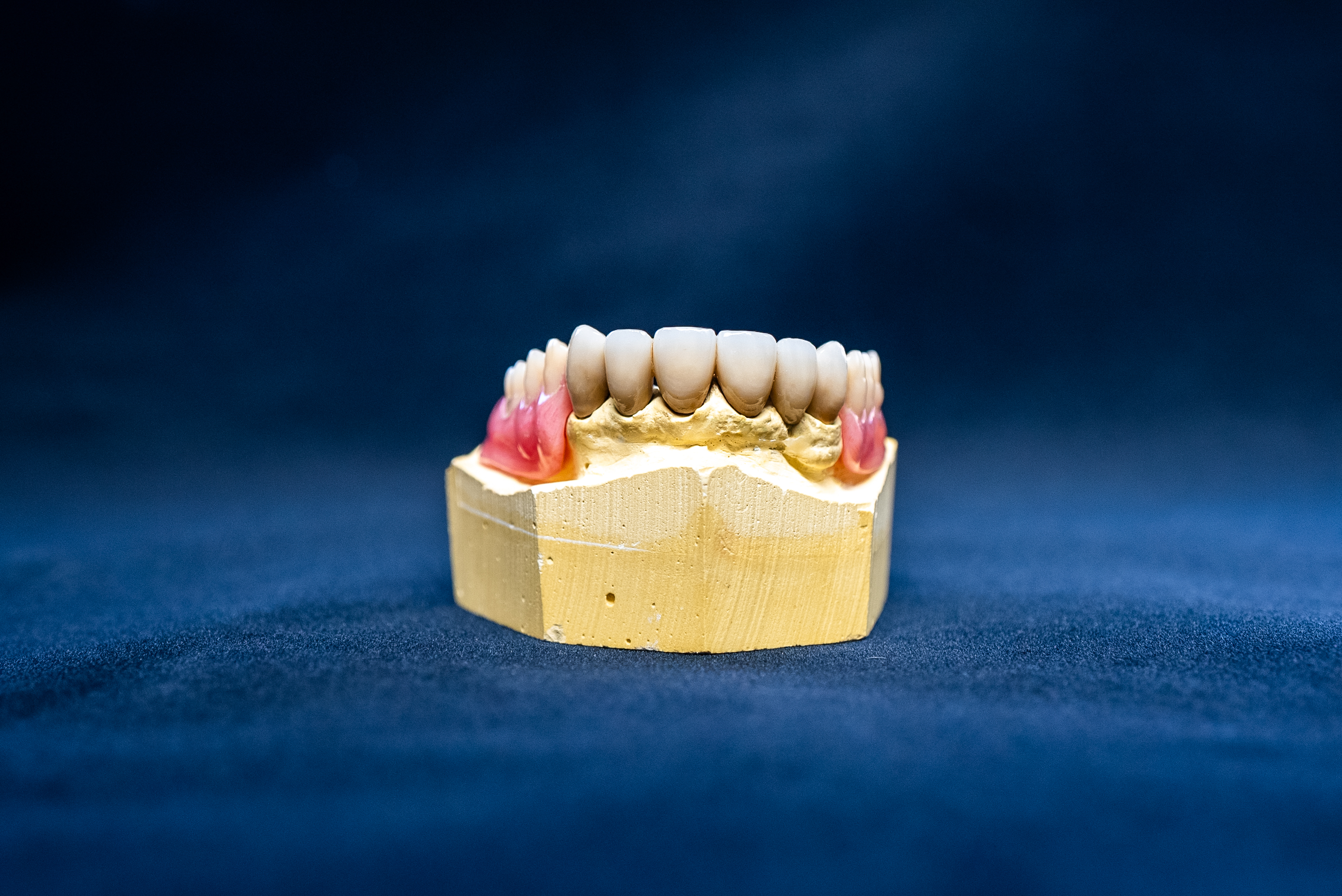
At Elite Prosthetic Dentistry in Bethesda, we've placed hundreds of All-on-4 restorations with remarkable success. Our specialist prosthodontist has over 3,900 successful implant placements with a 97% success rate, and All-on-4 has become one of our most requested procedures. The technique's elegance lies in biomechanics and positioning. By angling the implants strategically, we achieve excellent stability and support with fewer implants, often eliminating the need for bone grafting entirely.
How the Four Implants Work
The All-on-4 system places two implants in the anterior (front) region where bone quality is typically dense and excellent, and two implants in the posterior (back) region angled at approximately 45 degrees to engage deeper bone. This angled positioning uses areas where you might have existing bone, avoiding the areas where bone loss is typically most severe. The angled posterior implants provide cantilever support, allowing the final prosthesis to extend further back without requiring additional implants.
Immediate Temporary Prosthesis
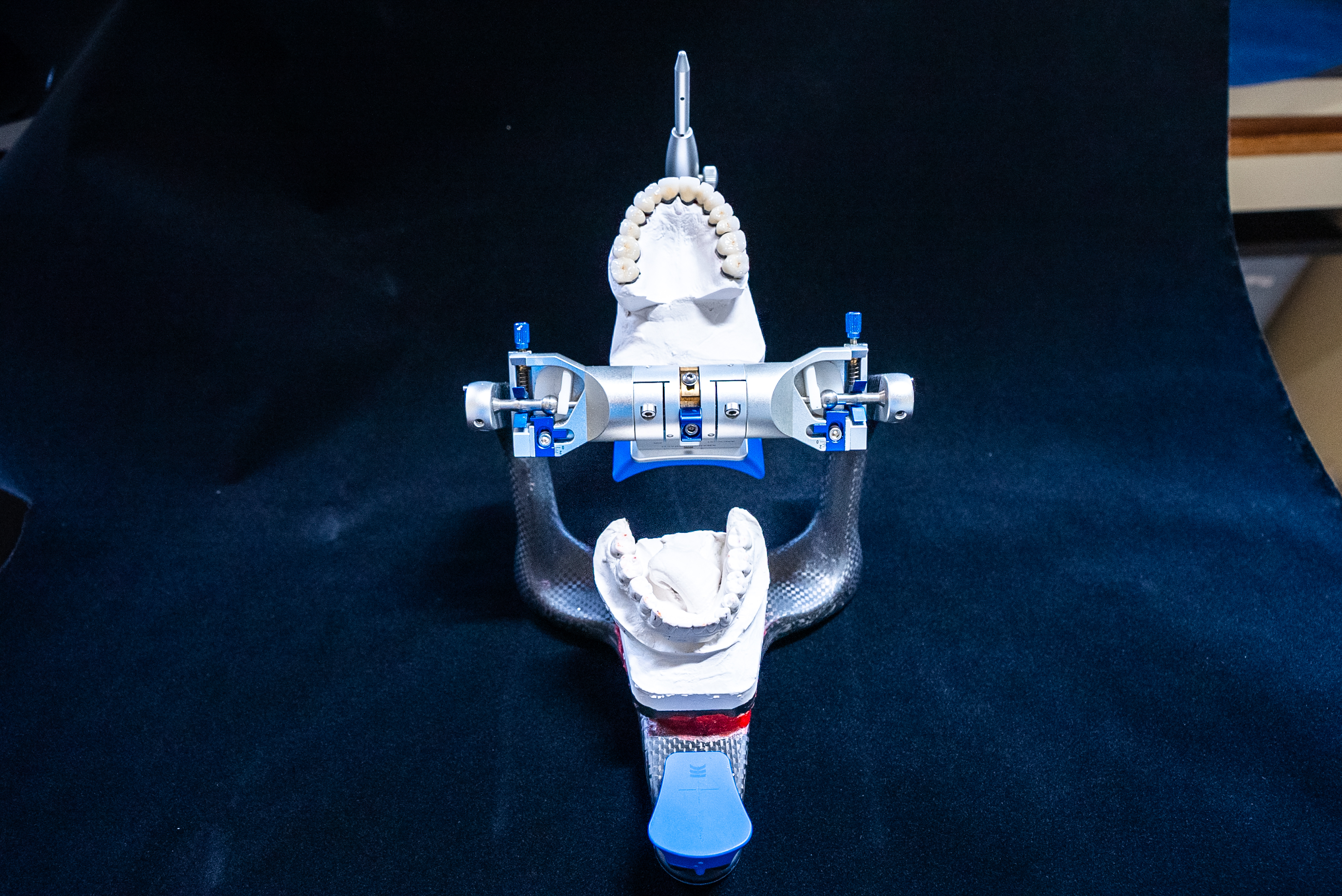
One of the most appealing aspects of All-on-4 is the ability to provide an immediate temporary prosthesis. On the same day you receive your implants, a temporary restoration is placed, allowing you to leave our office with teeth. You can eat and smile immediately, though on a modified diet for the first few weeks while bone integration occurs. This is life-changing for patients who have been wearing dentures or have been without teeth.
All-on-4 Versus Traditional Full-Arch Implants
While both approaches can restore a complete arch of teeth, there are important differences in implant number, cost, treatment time, and outcomes. Understanding these differences helps you make the best decision for your situation.
Implant Requirements and Bone Grafting
Traditional full-arch restoration typically requires 6 to 8 implants per arch, particularly if the goal is to have one implant beneath each tooth position for maximum support and esthetics. All-on-4 achieves full support with just four implants positioned at strategic angles. This means All-on-4 patients often avoid bone grafting entirely because we're leveraging bone that's already present. Traditional full-arch patients with moderate to severe bone loss typically need preliminary bone grafting, which extends treatment time by 4 to 9 months.
Cost Considerations
Because All-on-4 requires fewer implants and often no bone grafting, costs are typically lower. All-on-4 restoration usually ranges from $20,000 to $35,000 per arch, while traditional full-arch with grafting might range from $35,000 to $60,000 or more. The cost savings from fewer implants and no grafting can be substantial. For patients choosing between keeping dentures and getting implants, All-on-4 represents excellent value.
Treatment Timeline
All-on-4 is significantly faster. If no bone grafting is needed, you can go from consultation to final restoration in 5 to 7 months. Traditional full-arch implants with bone grafting typically take 10 to 15 months due to the time required for bone to integrate before implant placement. The ability to get your teeth replaced quickly is hugely appealing to many patients.
Esthetic Outcomes
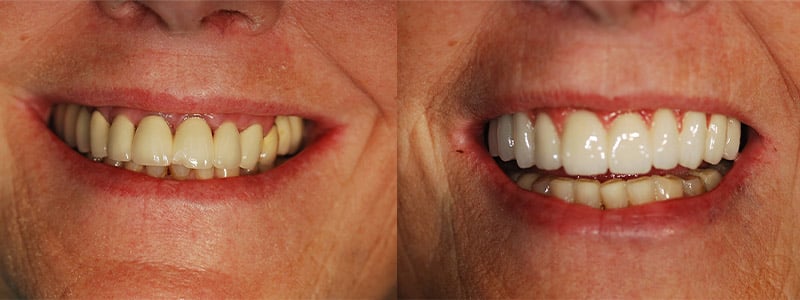
Traditional full-arch with more implants can sometimes achieve slightly superior esthetics because there's an implant beneath each tooth position, providing maximum support and preventing tissue resorption. All-on-4 achieves excellent esthetics through carefully designed prosthetics, but in some cases, the cantilever design means slightly less tissue support in back tooth regions. This is usually not clinically noticeable, and most All-on-4 patients are extremely satisfied with their esthetics. For a demonstration of successful results, explore our smile gallery.
Candidacy and Assessment
Most patients with advanced tooth loss or significant bone loss are candidates for All-on-4. Unlike traditional full-arch implants, which require substantial bone volume, All-on-4 can be successful in patients with moderate bone loss because of the strategic implant positioning. However, each patient requires individual assessment to determine the best approach.
Bone Loss Tolerance
If your posterior (back) jaw regions have good bone height and density, All-on-4 is often ideal. If you've had severe, long-standing bone loss that has reduced bone in all areas below 8mm, you might require some bone grafting even for All-on-4. Our 3D imaging during consultation shows us exactly what bone you have available and whether All-on-4 is suitable, or whether traditional full-arch or combined approaches are better.
Periodontally Compromised Teeth
If you're keeping some natural teeth that are compromised by gum disease, extracting them and replacing them with All-on-4 eliminates the ongoing infection and inflammation. This is one of the great advantages of full-mouth restoration. You're not trying to support healthy implants next to failing natural teeth. For more details about gum disease's relationship to implants, see our article on implants and gum health.
The All-on-4 Treatment Timeline
Understanding the timeline helps you plan for your restoration. From initial consultation to your final restoration, expect approximately 5 to 7 months if bone grafting isn't needed, or 10 to 15 months if bone grafting is necessary.
Immediate Phase (Day of Surgery)
You'll receive your implants and an immediate temporary prosthesis on the same day. This temporary is functional and esthetic but designed to minimize stress on the healing implants. You'll eat a soft diet for the first week and gradually progress to more normal foods as healing progresses.
Integration Phase (3-4 Months)
After surgery, your implants must integrate with bone in a process called osseointegration. During this phase, you'll have temporary teeth that look and function well, but the implants are bearing minimal load. You'll be seen regularly to monitor healing. Any adjustments to your temporary teeth are made as needed for comfort and function.
Final Restoration Phase (1-2 Months)
Once osseointegration is complete, you'll have your temporary teeth removed and your final restoration fabricated. Your final restoration is custom-milled to your exact bite and esthetics, created in our in-house laboratory for speed and quality. You'll return for fitting and adjustments, then you're done. Your final restoration should serve you for 10+ years or longer with proper care.
Specialist Placement Importance
The success of All-on-4 depends heavily on precise implant placement. Four implants must support an entire arch of teeth, so their positioning is critical. This is where specialist expertise makes an enormous difference. A prosthodontist has additional training in implant surgery, biomechanics, and restoration design. We understand how implant positioning affects long-term esthetics and function.
Elite Prosthetic Dentistry's experience with hundreds of All-on-4 cases means we've refined our placement technique to maximize success. We use advanced 3D imaging and planning software to determine ideal implant positions before surgery. During surgery, we use computer-guided implant placement when appropriate. This precision translates to better long-term outcomes and patient satisfaction.
Explore more about full-arch implant options, learn about replacing multiple teeth, compare implants and dentures, and understand how bone loss affects treatment planning. Visit our patient success stories to see how All-on-4 has transformed lives.
Related Articles
What Are Dental Implants?
Learn the fundamentals of implant technology and why they're the gold standard for tooth replacement.
Read MoreImplant Recovery Timeline
Understand what to expect during recovery and healing after implant placement.
Read MorePatient Stories
Read real success stories from Bethesda patients who achieved their smile goals with implants.
Read MoreSchedule Your Consultation Today
Ready to explore how dental implants can transform your smile? Our specialist prosthodontist serving Bethesda is ready to help. Call (202) 244-2101 or request a consultation.
Request Consultation